
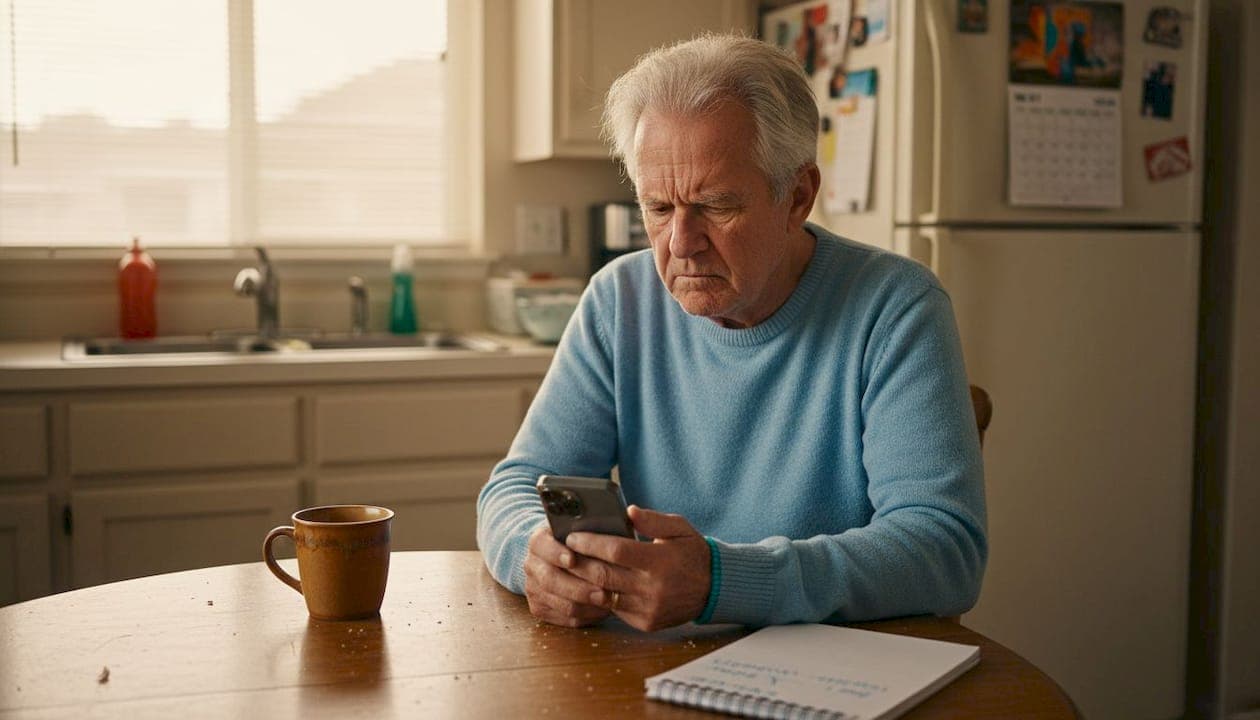
You pick up the phone and an urgent voice tells you your bank account has been compromised. Your heart races. The caller says you need to act right now or lose everything. Sound familiar? Consumers reported $12.5 billion in fraud losses in 2024, with imposter scams alone accounting for nearly $3 billion of that. The good news: you can learn to spot these calls before they cost you a dime. This guide walks you through exactly how to check if a call is a scam, from recognizing the tactics to using the right tools.
Table of Contents
- Know the most common phone scam tactics
- What you need before you answer: Preparation checklist
- Step-by-step: How to check if a call is a scam
- Technology that helps: Tools to check phone scams
- The rise of AI and deepfake phone scams: Advanced verification
- What to do if you suspect or confirm a scam call
- Protect yourself with ScamKit and expert tools
- Frequently asked questions
Key Takeaways
| Point | Details |
|---|---|
| Spot scammer tactics | Scammers use urgency, fake authority, and unusual payment requests to pressure you into action. |
| Prepare with the right tools | Use call blocking apps, register on Do Not Call lists, and save official contact numbers. |
| Verify before you act | Always hang up and call the real organization using a known number before sharing any information. |
| Technology helps but isn’t perfect | Tech tools block most scams but manual checks and caution are always needed. |
| Report to protect yourself and others | Reporting scam attempts helps stop criminals and warns your community. |
Know the most common phone scam tactics
Before you can protect yourself, you need to understand how scammers think. They are not random or clumsy. They are calculated, and they use proven psychological tricks to get what they want.
The most common type is the imposter scam. Someone calls pretending to be the IRS, Social Security Administration, your bank, a tech support agent, or even a family member in trouble. They sound convincing because they often have some of your personal information already, pulled from data breaches or social media.
Scammers also rely heavily on current scam trends like caller ID spoofing, which makes their number appear as a legitimate organization on your screen. That "IRS" call showing a Washington, D.C. area code? It could be coming from anywhere in the world.
Here are the classic red flags to watch for:
- Pressure to act immediately, with no time to think
- Requests to pay via gift cards, wire transfer, or cryptocurrency
- Threats of arrest, lawsuits, or account freezes
- Demands for secrecy ("Don't tell anyone about this call")
- Instructions to grant remote access to your computer
"Recognize scam red flags: pressure to act immediately, requests to pay via untraceable methods like gift cards, wire transfers, or crypto, demands for secrecy, threats of arrest, or instructions to move money."
If any of these show up during a call, treat it as a major warning sign. Real government agencies and banks do not operate this way.
What you need before you answer: Preparation checklist
Now that you recognize scammer tactics, preparation is your best line of defense. Most people wait until they are already on a suspicious call to start thinking about what to do. That is too late. Set yourself up in advance.
Start by saving official contact numbers for your bank, credit card companies, and government agencies directly from your paper statements or official websites. That way, you always have a verified number to call back.
Next, use call blocking apps and register your number with the National Do Not Call Registry. Apps like Truecaller, Hiya, and YouMail can label or block known spam numbers before your phone even rings.
| Tool | What it does | Best for |
|---|---|---|
| Truecaller | Identifies and blocks spam callers | General use |
| Hiya | Flags scam and fraud numbers | Families |
| YouMail | Blocks robocalls, provides voicemail | Robocall protection |
| Carrier tools | Built-in spam filters (AT&T, Verizon) | No-download option |
| ScamKit phone checker | Instant scam risk assessment | Quick verification |
You should also use a phone number scam checker to quickly assess any number that contacts you. If you have elderly parents or kids with phones, setting up protections for family members ahead of time can prevent a lot of heartache.
Key rules to set in advance:
- Never share one-time verification codes with anyone, ever
- Never grant remote access to your device to an unsolicited caller
- Always hang up and call back using a number you already trust
Pro Tip: Write your bank's official number on a sticky note and keep it near your phone. When a "bank" calls you, hang up and dial that number instead.
Step-by-step: How to check if a call is a scam
With your tools ready, follow these steps whenever you get a suspicious call.
- Stay calm and take notes. Write down the caller's name, the organization they claim to represent, the phone number displayed, and what they are asking for. Scammers count on panic to cloud your judgment.
- Never act immediately. No legitimate agency or company will demand instant action. If someone says you must pay or decide right now, that urgency is manufactured.
- Ask questions only the real person would know. If someone claims to be your nephew in trouble, ask about a shared memory or a family detail. Scammers cannot answer these.
- Hang up and call back using an official number. Contact the official number from your records or statements, not the one the caller gave you.
- Run a reverse lookup on the number. Paste it into a search engine or use a dedicated tool to see if others have flagged it as a scam.
- Check for text message follow-ups. Scammers often send texts to reinforce their story. Learn how to identify text message scams so you can catch them there too.
"Hang up on unexpected calls claiming account issues or emergencies and independently verify by contacting the official number from your records or statements."
Pro Tip: If a caller insists you stay on the line while you "verify" something, that is a manipulation tactic. Real organizations will never object to you hanging up and calling back.
Technology that helps: Tools to check phone scams
For extra confidence, consider using technology designed to spot phone scams efficiently. No single tool is perfect, but combining a few gives you a strong safety net.
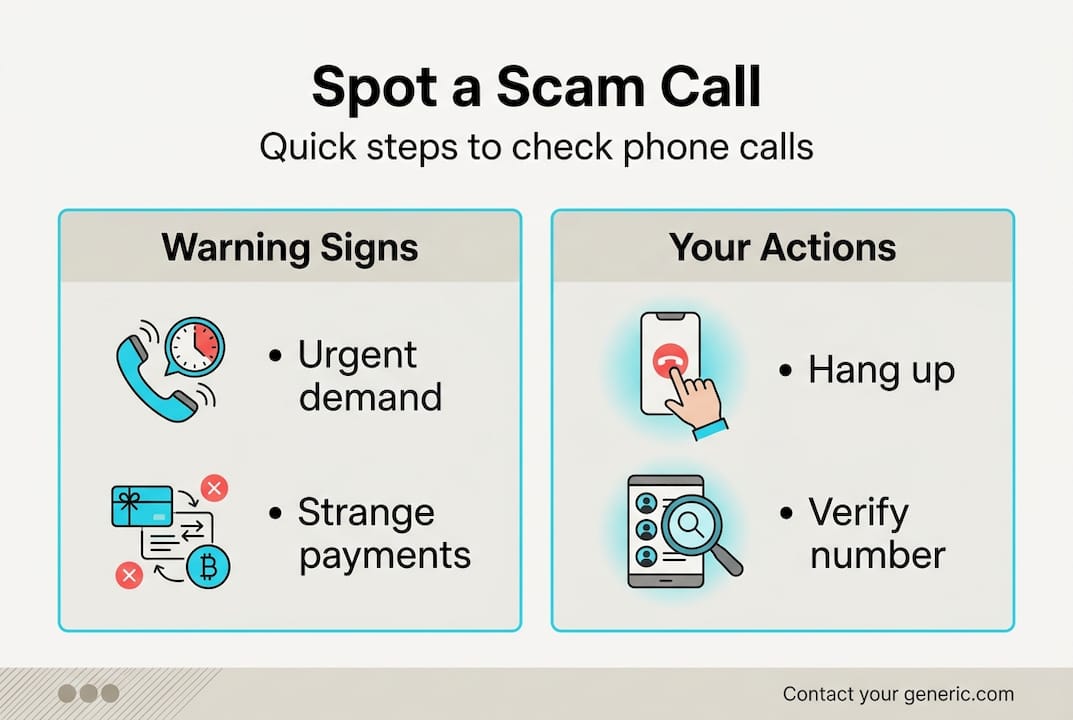
Reverse phone lookups using apps like Truecaller let you identify unknown callers and check whether a number has been flagged for scam activity. Hiya and YouMail offer similar databases with millions of reported numbers.
| Tool type | Accuracy | Free option | Limitation |
|---|---|---|---|
| Reverse lookup apps | High | Yes | Misses new scam numbers |
| Carrier spam filters | Moderate | Yes | Varies by carrier |
| ScamKit phone checker | High | Yes | Requires manual input |
| FTC scam database | Moderate | Yes | Reporting lag |
Use the phone scam checker tool on ScamKit for a fast, no-signup risk assessment of any number. It is especially useful when you get a call and want a second opinion before calling back.
Pro Tip: Scammers are increasingly using QR codes in follow-up texts after a call. If you receive one, check out how to protect against QR scams before scanning anything.
Remember: no tool catches 100% of scam calls. Manual verification, like calling back on a known number, is always your most reliable step.
The rise of AI and deepfake phone scams: Advanced verification
Scam technology is evolving fast, and AI is making voice and caller ID spoofing more convincing than ever. This is not science fiction. It is happening right now.
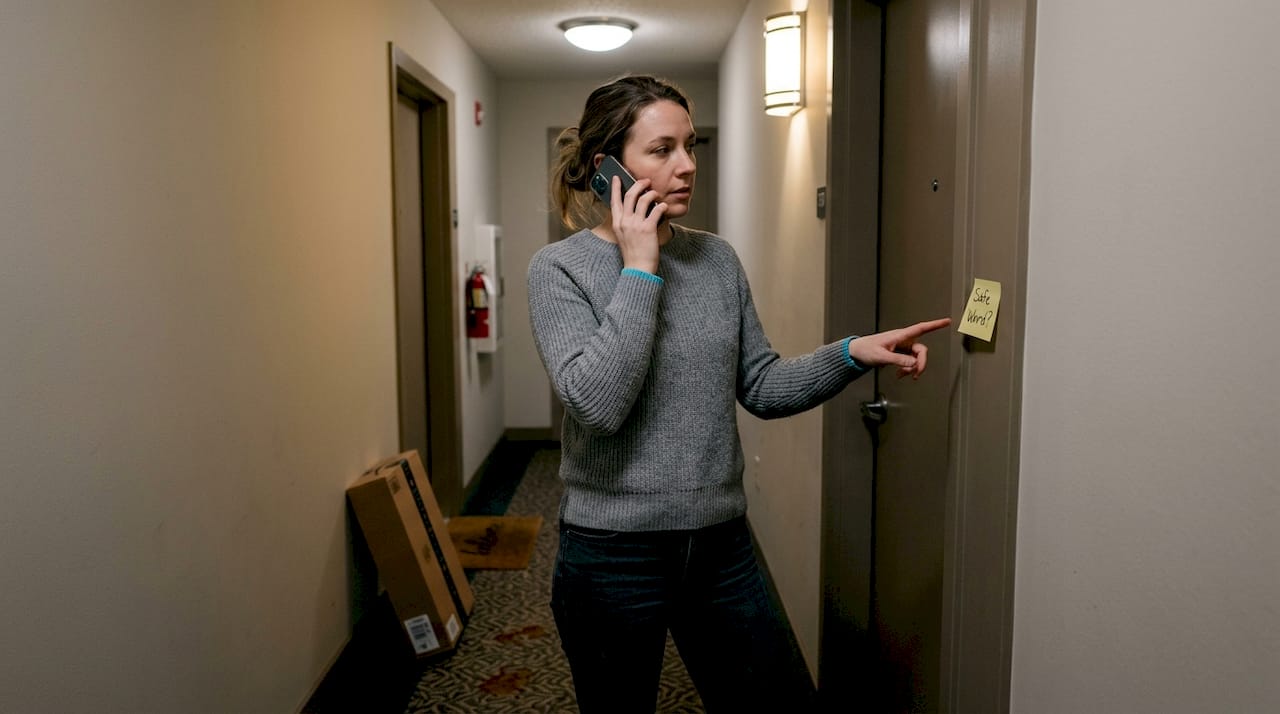
AI voice cloning can replicate a person's voice from just a few seconds of audio pulled from social media. A scammer can make it sound like your daughter is crying and asking for help. The emotional impact is immediate and overwhelming.
The BBB warns about AI deepfakes and recommends verifying identity with personal questions or safe words, and listening for unnatural audio artifacts. Here is what to watch for:
- Odd phrasing or slightly robotic speech patterns
- Awkward pauses that do not match natural conversation
- Background noise that sounds artificial or looped
- Reluctance to answer specific personal questions
- Calls that cut out when you ask for details
"Verify identity with personal questions or safe words established in advance; check for unnatural audio or artifacts in the voice."
The best defense against AI voice cloning scams is a family safe word. Pick a word or phrase that only your household knows. If someone calls claiming to be a family member in trouble, ask for the safe word. A scammer cannot provide it. You can also learn more about spotting deepfakes to stay ahead of this growing threat.
What to do if you suspect or confirm a scam call
Even with preparation, you might encounter a scam attempt. Here is how to react immediately and responsibly.
- Hang up right away. Do not engage, argue, or try to outsmart the caller. Every second you stay on the line gives them more opportunity.
- Block the number. Go into your call log and block it directly from your phone settings.
- Do not share anything. Never share personal or financial information, verification codes, or grant remote access, and consult a trusted family member before taking any action.
- Report the call. Use official FTC reporting at ReportFraud.ftc.gov. You can also use reporting scams resources on ScamKit to document and share what happened.
- Warn your network. Tell friends and family, especially older relatives, about the call. Scammers often target multiple people in the same area or demographic.
- Review your security settings. Update your phone's spam filter settings and check if any apps were granted unusual permissions.
Pro Tip: Scam attempt reports increased 50 percent in recent years, and while blocking apps stop most spam, false positives happen. Review your blocked call log occasionally so you do not miss legitimate calls.
Protect yourself with ScamKit and expert tools
Knowing the steps is powerful. Having the right tools makes it effortless. ScamKit was built specifically for people like you: no tech background required, no sign-up, no data collection.
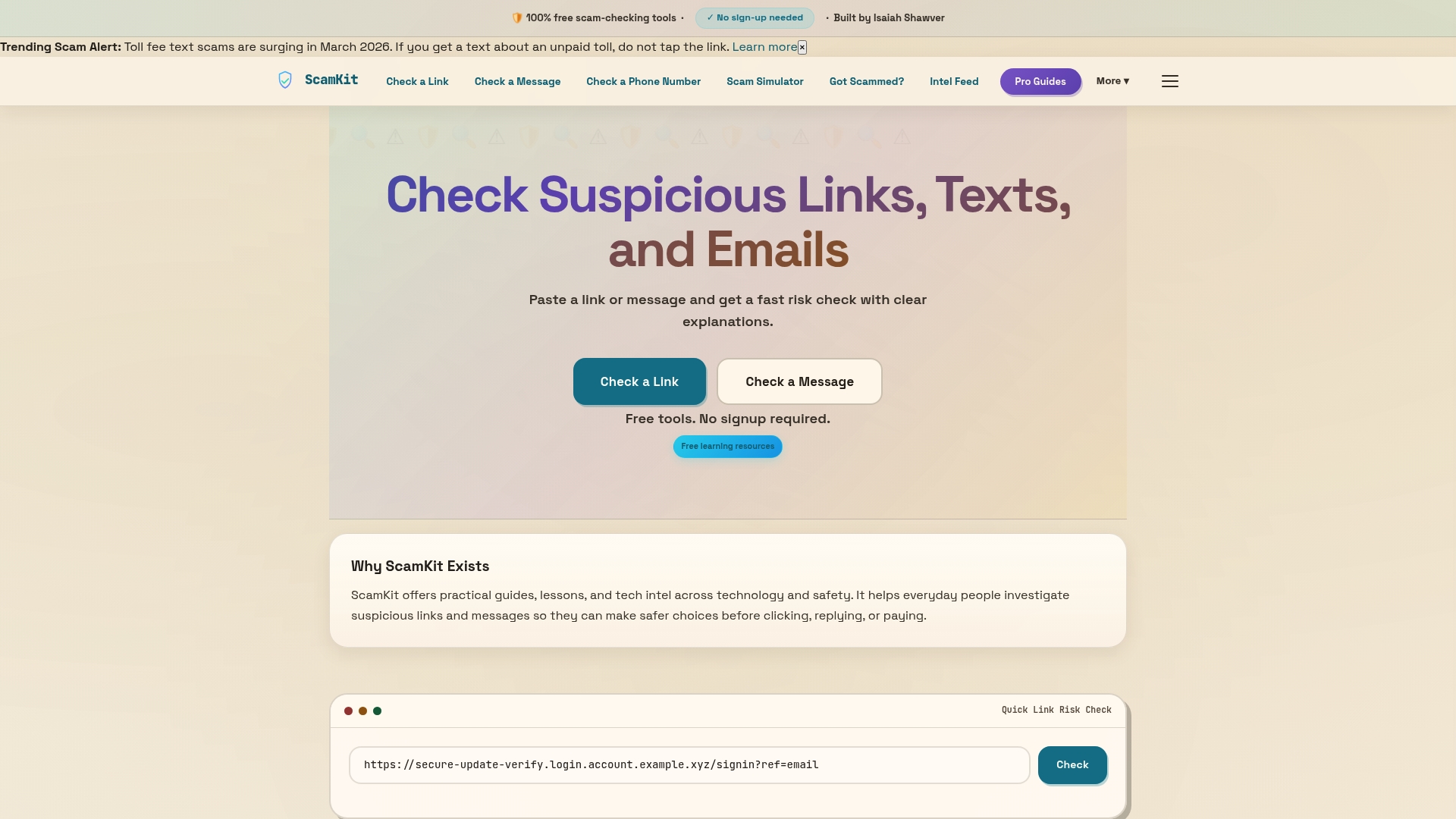
You can practice spotting scam calls with ScamKit's interactive quiz, which trains you to recognize real-world tactics before a scammer ever dials your number. The message scam checker helps you evaluate suspicious texts and emails in seconds. And if you want a full overview of everything available, the ScamKit homepage is your starting point for free, practical tools covering phone scams, URL checks, deepfake awareness, and more. Staying safe does not have to be complicated.
Frequently asked questions
How can I check if a phone number is safe or a scam?
Reverse phone lookups using apps like Truecaller can identify unknown callers and flag scam-associated numbers. Always follow up by calling back on an official number from your own records, not one provided by the caller.
What are 3 signs a phone call is a scam?
The three most common signs are pressure to act immediately, requests for payment via gift cards or wire transfers, and demands for secrecy. If any one of these shows up, treat the call as suspicious.
Can scammers fake caller ID or sound like someone I know?
Yes. Scammers use spoofing technology to fake caller ID and AI tools to clone voices of people you trust. Always use a pre-agreed safe word or ask a personal question only the real person would know.
Do call blocking tools stop all scam calls?
No. Blocking apps are effective but not perfect. Apps block most spam but false positives occur, and new scam numbers slip through. Combine app protection with cautious behavior for the best results.
What should I do if I fell for a phone scam?
Contact your bank immediately to freeze or monitor your accounts, update your passwords, and report the fraud to the FTC at ReportFraud.ftc.gov. Acting fast limits the damage significantly.