

TL;DR:
- Phone scams cause billions in losses annually and target all age groups.
- Key warning signs include unsolicited calls, urgency, requests for sensitive info, and untraceable payments.
- Built-in behavioral habits like hanging up and verifying independently are crucial defenses.
Phone scams cost Americans billions every year, and the numbers keep climbing. What's alarming isn't just the dollar amount. It's who gets targeted. Families, retirees, working adults, even people who consider themselves tech-savvy are falling for these calls every single day. Scammers have gotten smarter, faster, and more convincing. But here's the good news: once you know what to look for, you can stop most scams before they cause any damage. This guide walks you through exactly how to recognize a suspicious phone call, understand what's happening behind the scenes, and protect yourself and your family with practical steps that actually work.
Table of Contents
- What defines a suspicious phone call?
- How scammers operate during phone calls
- Advanced tactics: voice cloning and targeted scams
- How to verify and respond to suspicious phone calls
- Our perspective: why suspicious phone calls still succeed in 2026
- Protect your family and stay ahead of phone scams
- Frequently asked questions
Key Takeaways
| Point | Details |
|---|---|
| Recognize key red flags | Urgency, threats, secrecy, and requests for untraceable payment usually mean a phone call is suspicious. |
| Verify before sharing | Always double-check caller identity using official channels before giving out any information. |
| Report scams promptly | Reporting suspicious calls to the FTC or FBI helps combat fraud and protects others. |
| Family strategies matter | Setting up code words and using call screening tools can help keep loved ones safe. |
What defines a suspicious phone call?
Understanding the urgency of the scam landscape, let's break down what truly makes a phone call suspicious.
A suspicious phone call isn't always obvious. Scammers don't announce themselves. They sound professional, calm, and sometimes even friendly. The red flags are often subtle at first, then escalate fast.
Here are the most common warning signs:
- You didn't initiate the call. Unsolicited calls from unknown numbers should always raise your guard.
- There's pressure to act immediately. Phrases like "Your account will be closed today" or "You'll be arrested if you don't pay now" are classic manipulation tools.
- The caller claims to be someone official. Banks, the IRS, Social Security Administration, Medicare, or law enforcement are frequently impersonated.
- They ask for sensitive information. Social Security numbers, bank details, passwords, or one-time codes are never something a legitimate organization will request over an unexpected call.
- They want untraceable payment. Gift cards, wire transfers, or cryptocurrency are the preferred payment methods of scammers.
Scammers use urgency and threats to push you into making fast decisions before you have time to think. That's intentional. The moment you feel rushed or scared, your rational thinking slows down.
The FBI warns publicly about scammers who impersonate law enforcement and government officials. These calls often include fake badge numbers, case numbers, and threats of immediate arrest. They sound terrifyingly real.
Here's a quick look at the most common scam call types:
| Scam type | Who they impersonate | What they want |
|---|---|---|
| Government imposters | IRS, SSA, Medicare | Money or personal info |
| Bank fraud alerts | Your bank or credit union | Account credentials |
| Family emergency scams | A relative in crisis | Immediate wire transfer |
| Tech support scams | Microsoft, Apple | Remote device access |
| Prize or lottery scams | Publishers Clearing House | Upfront fees |
One of the most unsettling trends is AI voice cloning scams, where criminals use artificial intelligence to mimic the voice of someone you trust. We'll cover that in more detail shortly.
How scammers operate during phone calls
Now that you know the signs of a suspicious call, let's examine how scammers actually pull off these schemes.
Scammers don't rely on luck. They use a combination of technology and psychology to manipulate their targets. Understanding their methods takes away a lot of their power.
Caller ID spoofing is one of their most effective tools. Scammers can make any number appear on your screen, including your own bank's number or a local area code. Spoofed caller IDs paired with urgency and secrecy are hallmarks of nearly every phone scam. Never trust a number just because it looks familiar.
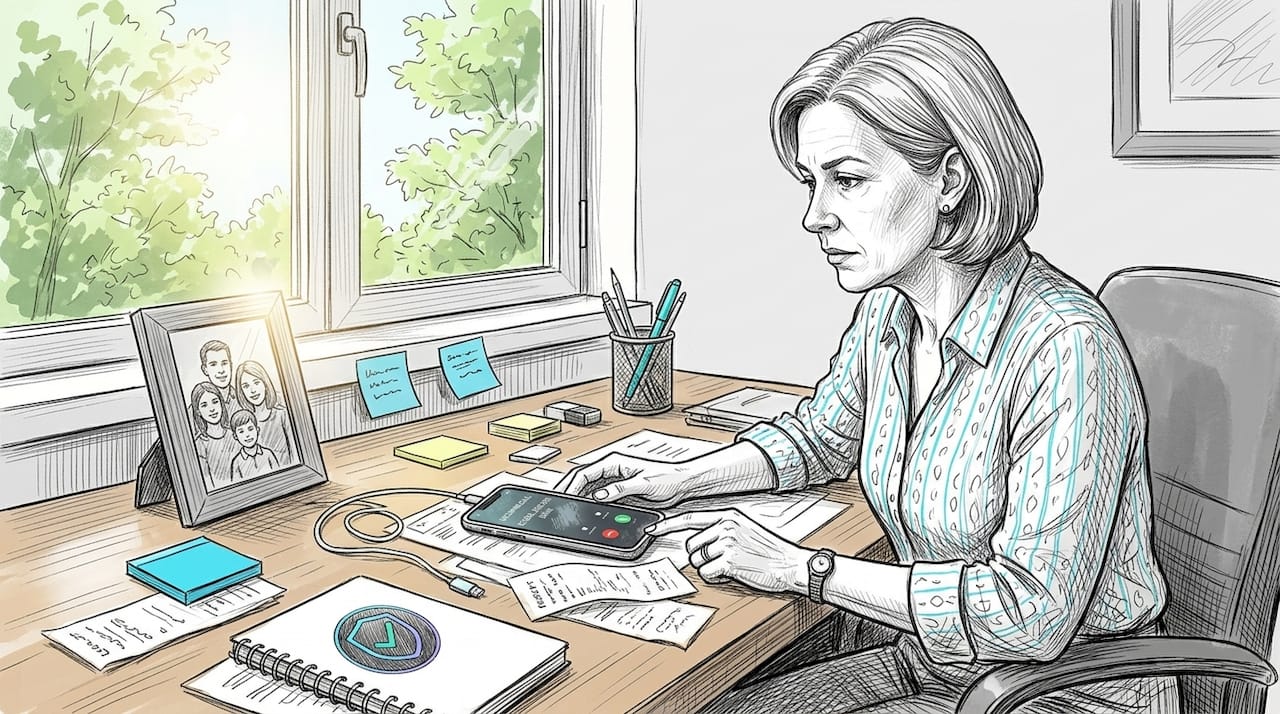
Vishing, or voice phishing, is the technical term for phone-based scams. It combines spoofing with real-time persuasion techniques. The caller walks you through a scripted scenario designed to trigger fear, sympathy, or excitement.
Here's how a typical scam call unfolds:
- The hook. You receive a call from what appears to be your bank or a government agency.
- The crisis. The caller tells you there's an urgent problem, a fraudulent charge, a warrant for your arrest, or a compromised account.
- The isolation. They tell you not to tell anyone or hang up, claiming it could make things worse.
- The demand. They ask you to verify your identity, transfer funds, or provide a one-time code.
- The exit. Once they have what they need, the call ends and the damage is done.
| Legitimate caller | Scam caller |
|---|---|
| Doesn't pressure you to act now | Creates extreme urgency |
| Never asks for gift cards | Demands gift cards or wire transfers |
| Okay with you calling back | Insists you stay on the line |
| Won't ask for your PIN or code | Asks for one-time codes or passwords |
Pro Tip: If any caller tells you to keep the conversation secret, that's your clearest signal to hang up. Legitimate organizations never operate that way.
For a deeper breakdown of how to verify whether a call is real, our call scam verification guide walks through the process step by step. You can also find practical phone scam verification tips to help you make safer decisions in the moment.
Advanced tactics: voice cloning and targeted scams
With basic schemes covered, let's move into the evolving threats using new technology and deeper social engineering.
Scam calls have entered a new era. The tactics we just described were already effective. Now add artificial intelligence into the mix, and things get significantly more dangerous.
AI voice cloning is exactly what it sounds like. Scammers use publicly available audio, from social media videos, voicemails, or YouTube clips, to generate a convincing replica of someone's voice. AI cloning enables scammers to impersonate family members with startling accuracy. You might hear what sounds exactly like your son, daughter, or grandchild.
Here's what makes these calls so hard to resist:
- The voice sounds genuinely familiar, not robotic or strange.
- The caller knows personal details pulled from social media or data breaches.
- The scenario is emotionally charged, a car accident, an arrest, a medical emergency.
- There's a second caller, often posing as a lawyer or police officer, who takes over to "handle" the situation.
The grandparent scam follows a specific and cruel playbook. A grandparent receives a panicked call from someone who sounds like their grandchild. The "grandchild" says they're in trouble and need money fast. A "lawyer" or "officer" then gets on the line to explain how to send bail money or legal fees. The grandparent, terrified and acting out of love, sends money before verifying anything.
"Scammers use AI voice cloning combined with personal data harvested from social media to make family emergency calls nearly impossible to distinguish from real ones."
Even people who know about these scams can be fooled. The emotional trigger of hearing a loved one in distress bypasses logical thinking almost instantly. That's not a weakness. It's a deeply human response.
For real-world voice cloning scam examples and how to recognize them, we've put together detailed resources. If you have older relatives, check out our guide on scam prevention for families to help them stay protected.
How to verify and respond to suspicious phone calls
Knowing the risks, let's focus on exactly how you should respond to and verify suspicious calls, step by step.
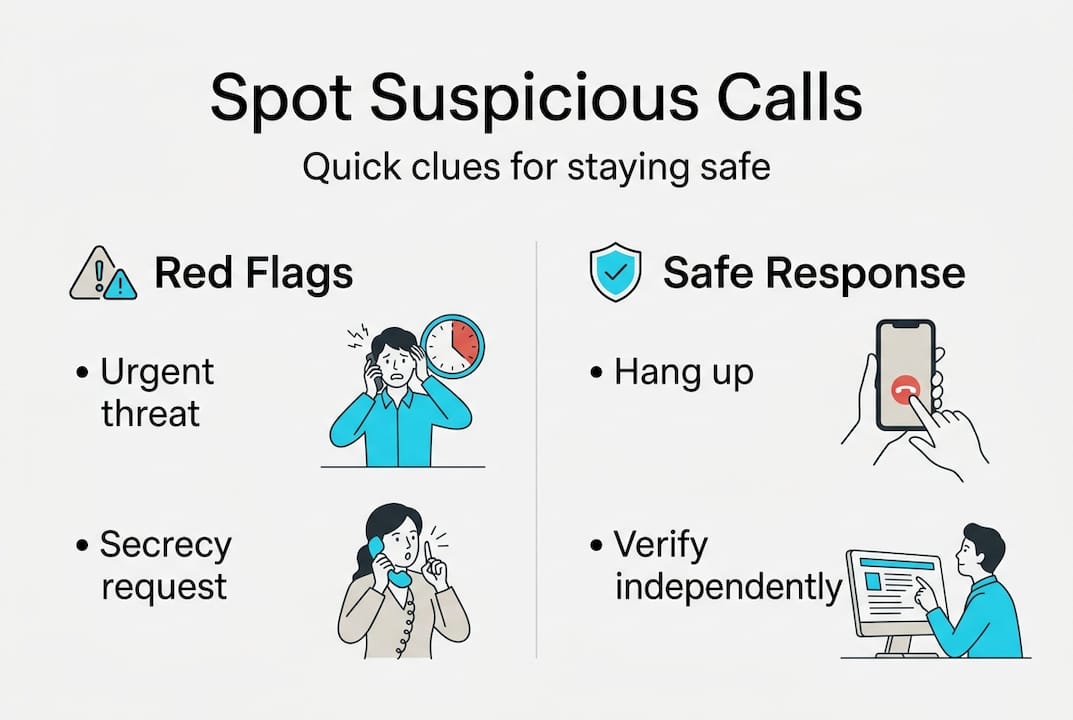
The most important thing you can do when a call feels wrong is simple. Hang up. You don't owe anyone an explanation. You don't need to be polite about it.
Here's a clear action plan:
- Hang up immediately if you feel pressured, threatened, or confused. Don't engage further.
- Don't call back using any number the caller gave you. That number may connect you directly back to the scammer.
- Verify independently. Look up the official number for the organization they claimed to represent and call that number yourself.
- Use a phone scam checker. Run the number through ScamKit's phone scam checker to see if it's been flagged by others.
- Never share sensitive information. No legitimate organization will ask for your Social Security number, bank PIN, or one-time verification code over an unexpected call.
- Don't allow remote access. If anyone asks to connect to your computer or phone to "fix" something, decline immediately.
- Report the call. File a report with the FTC at reportfraud.ftc.gov or the FBI's Internet Crime Complaint Center at ic3.gov.
Pro Tip: Create a family code word. If someone calls claiming to be a family member in an emergency, they must say the code word before you take any action. Scammers won't know it.
Reporting scams helps fight fraud, especially for adults over 60 who are most frequently targeted. Your report could prevent the same scam from reaching someone else in your community.
For additional protection, review these mobile security tips to reduce your overall exposure to phone-based threats. And explore our family phone safety tools to set up protection for parents or elderly relatives who may be less familiar with these tactics.
Our perspective: why suspicious phone calls still succeed in 2026
To wrap up, let's look at why these scams remain so effective and what most guides miss about how to counter them.
Most people assume they'd never fall for a phone scam. That confidence is actually part of the problem. Scammers don't target ignorance. They target emotion.
When fear or urgency kicks in, the part of your brain responsible for careful reasoning takes a back seat. Even smart victims fall for advanced spoofing and emotional manipulation. This isn't about intelligence. It's about how human psychology works under pressure.
Most guides focus on technology as the solution. Block this number, install that app. Technology helps, but it's not enough. The real defense is behavioral. It's building habits like hanging up first and verifying second, creating family code words, and talking openly about scam tactics so they lose their power.
The biggest vulnerability isn't a lack of tools. It's the combination of trust and secrecy that scammers exploit. They count on you not wanting to seem paranoid or rude. They count on you keeping the call secret. Break that pattern and you break the scam.
For a deeper look at how AI is changing the threat, our AI voice scam insights page covers the latest developments in plain language.
Protect your family and stay ahead of phone scams
Ready to take action? Here's how ScamKit can help you and your loved ones stay safe.
ScamKit gives you free, instant tools to check suspicious phone numbers before you respond or call back. No sign-up required. Just enter the number and get a risk assessment based on real reports and scam databases.
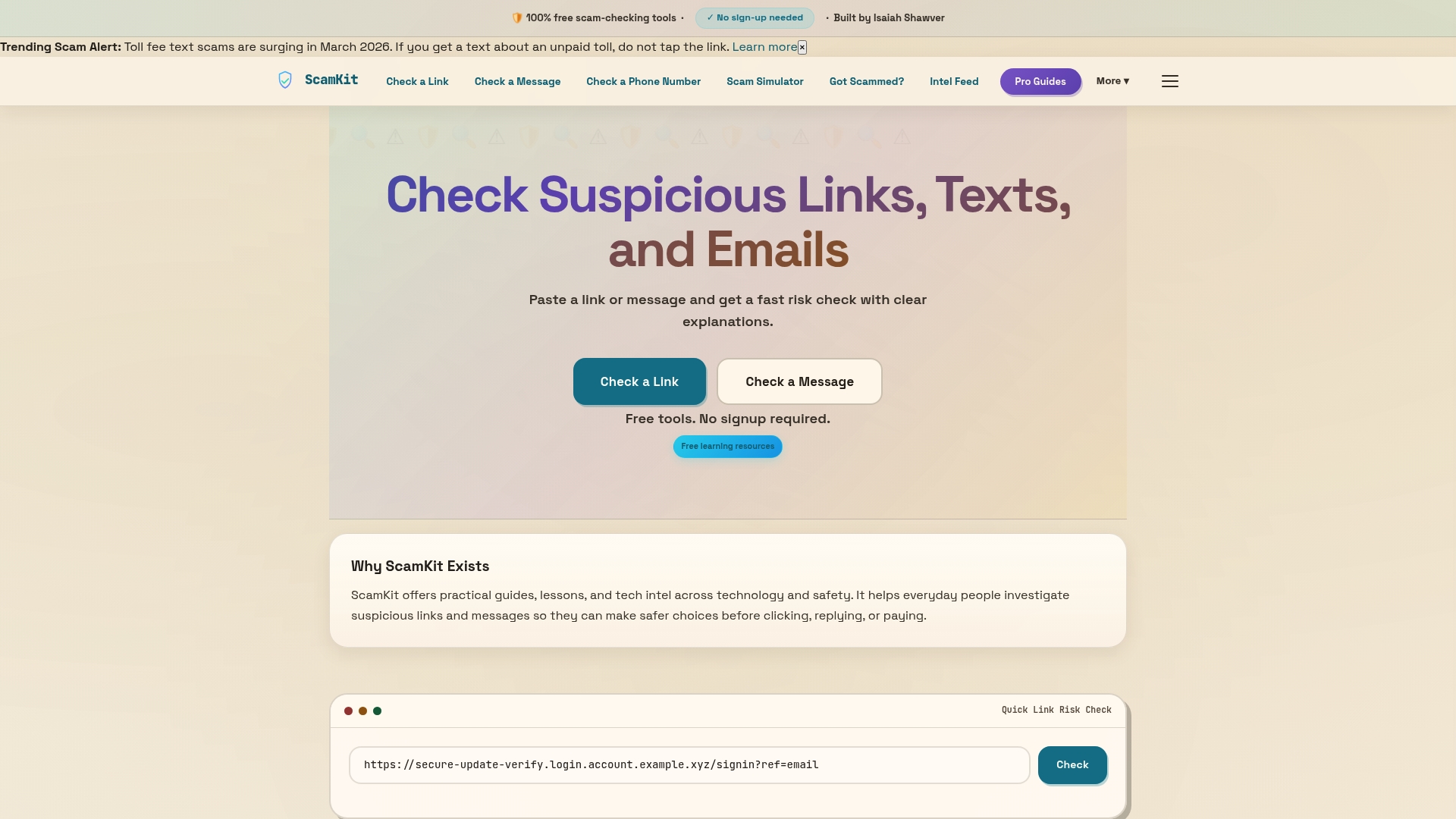
If you have parents, grandparents, or other family members who receive a lot of calls, our family scam prevention setup guide walks you through protecting them in minutes. You can also use our phone scam checking tool anytime a number feels off. ScamKit is built for everyday people who want real protection without complexity. Explore the platform, share it with someone you care about, and make scam awareness a regular habit in your household.
Frequently asked questions
What should I do if I receive a suspicious phone call?
Hang up, verify independently, and report the incident to the FTC or FBI using their official websites. Never use contact information provided by the suspicious caller.
How can I spot a scam phone call quickly?
Look for urgency, threats, requests for secrecy, and demands for gift cards or wire transfers, which are never used by legitimate organizations. Caller ID spoofing is also a strong indicator.
Are phone scam losses really that high?
Yes. Billions lost annually to phone scams, with adults over 60 reporting the highest losses. Imposter scams consistently rank as the most damaging category.
Can technology outsmart phone scammers?
AI deepfake scams are rising, which means technology alone isn't enough. Independent verification and family safety strategies remain the most reliable defense against sophisticated phone scams.
Recommended
- How to check if a call is a scam: step-by-step guide
- 5 phone scam verification tips to protect yourself
- ScamKit — Check If a Link, Text, or Email Is a Scam
- Someone Called Saying My SSN Is Suspended | ScamKit
- Phishing attack examples in 2026: real tactics and defenses
- Protect your data: top mobile security tips for travelers | Lumo eSIM Store