
TL;DR:
- Fraud losses hit $12.5 billion in 2024, with scammers using advanced tech like AI and deepfakes.
- Most scams exploit emotions like urgency and secrecy, urging immediate payments via untraceable methods.
- Education, skepticism, verification, and reporting are key to safeguarding against evolving scam techniques.
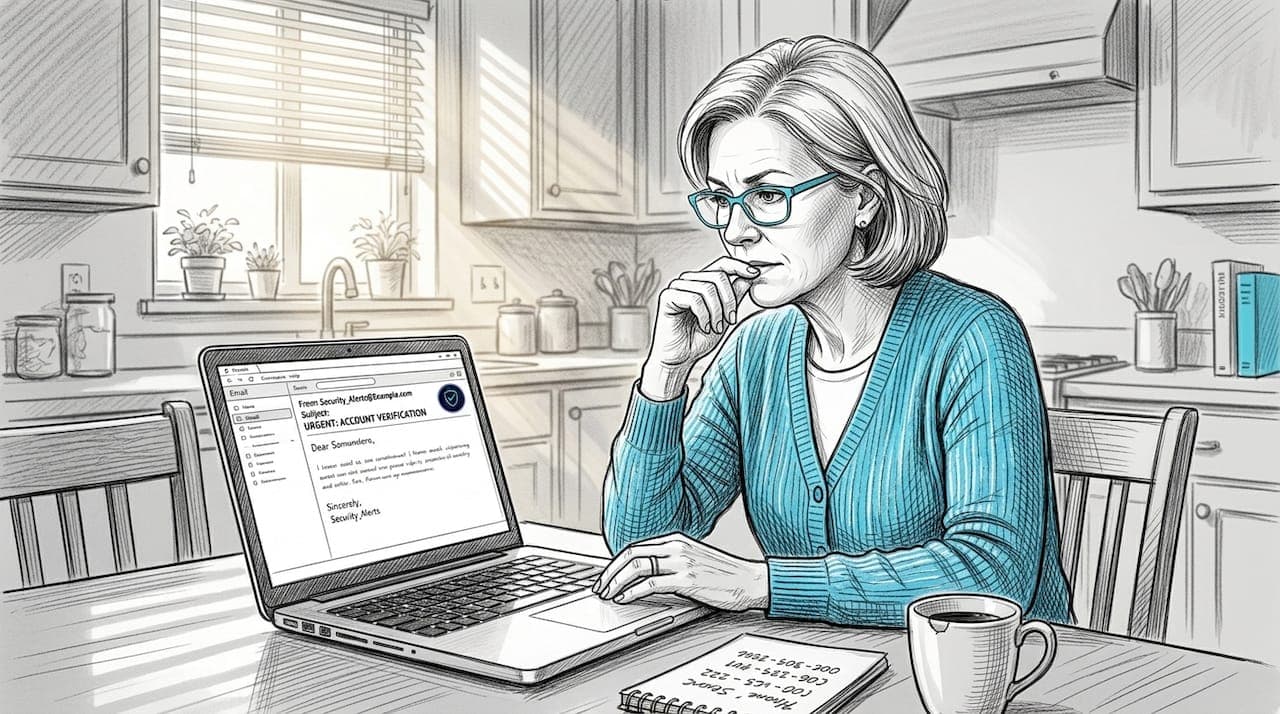
Scams are no longer just a nuisance. They are a full-blown financial crisis. In 2024, total fraud losses hit $12.5B, a jump of $2.5 billion from the year before. Online scams alone accounted for $3 billion of that. And if you got a call from a scammer, the median loss was $1,500. These are not abstract numbers. They represent real people, real families, and real savings wiped out. The scary part? Scammers are getting better at what they do. They sound more convincing, look more legitimate, and hit at exactly the right emotional moment. This guide will walk you through how they do it, what to watch for, and exactly how to protect yourself.
Table of Contents
- How scammers hook you: The psychology of common techniques
- The top 6 scam techniques and red flags to spot them
- How new technology makes scams harder to detect
- Who is most at risk? Demographics, losses, and reporting tips
- How to protect yourself and your family: Immediate action steps
- Why education, not just tech, is the ultimate scam defense
- Take action: Advanced scam protection tools from ScamKit
- Frequently asked questions
Key Takeaways
| Point | Details |
|---|---|
| Scams exploit urgency | Most scams use panic and pressure to bypass your judgment. |
| Know the top tactics | Imposter, phishing, tech support, investment, job, and grooming scams dominate the landscape. |
| Tech boosts scam realism | AI and spoofing now make scams harder to spot and more effective. |
| Reporting helps combat fraud | Always report any scam to support enforcement and protect others. |
| Education is your best defense | Proactive habits and open discussion keep families far safer than any tool alone. |
How scammers hook you: The psychology of common techniques
While the scale and sophistication are daunting, most scams rely on simple psychological tricks. Scammers are not masterminds. They are manipulators who exploit basic human emotions. Once you understand their playbook, you will start seeing the warning signs before it is too late.
Here is what almost every scam has in common:
- Urgency and panic. Scammers create fear with threats of arrest, account closure, or a family emergency. The goal is to make you act before you think.
- Impersonation. They pretend to be your bank, the IRS, Amazon, or even a family member in trouble.
- Secrecy. They will tell you not to talk to anyone else. That isolation is intentional. It cuts off your ability to verify.
- Untraceable payment requests. Gift cards, wire transfers, cryptocurrency. These are not coincidences. They are chosen because they are nearly impossible to recover.
"If someone is pressuring you to act immediately and telling you not to tell anyone, that is the scam. Slow down. Real organizations do not operate that way."
Following scam avoidance best practices consistently is your first line of defense. The moment you feel rushed or scared, treat that as a red flag, not a reason to comply.
Pro Tip: Any time you get an urgent request, hang up or close the message. Then independently look up the official number or website and contact them directly. Never use contact info provided by the person who reached out to you.
The top 6 scam techniques and red flags to spot them
Understanding why scams work is the first defense. Let's break down the most common techniques so you know what to look for:
- Imposter scams. Imposter scams are the most reported, with scammers posing as government agencies, businesses, or even relatives. They create urgency and demand immediate payment or personal information.
- Phishing and smishing. Fake emails and texts that look like they come from real companies. They contain links to counterfeit login pages designed to steal your credentials. Learn more about phishing email tactics and smishing and text scams.
- Tech support scams. A pop-up or call claims your device has a virus. They ask for remote access to "fix" it. Once in, they steal data or install real malware.
- Investment scams. Promises of huge returns, usually involving crypto. Often pushed through social media by fake profiles. The new scam trends show these are growing fast.
- Job scams. Fake remote job offers that require you to pay upfront for training, equipment, or background checks. Real employers never ask for that.
- Financial grooming. This one takes time. A scammer builds a relationship over weeks or months, then eventually asks for money. Common in romance scams and fake investment clubs.
| Scam type | Key red flag | Payment method used |
|---|---|---|
| Imposter | Claims to be authority | Wire transfer, gift cards |
| Phishing | Suspicious link in email | Login credential theft |
| Tech support | Unsolicited pop-up or call | Remote access, credit card |
| Investment | "Guaranteed" high returns | Cryptocurrency |
| Job scam | Upfront fee required | Bank transfer |
| Financial grooming | Sudden large money request | Wire transfer, crypto |
Requests for untraceable payments like gift cards, wire transfers, or cryptocurrency are one of the clearest signs something is wrong. Legitimate businesses and government agencies do not ask for payment this way.
Pro Tip: Before clicking any link or responding to any suspicious message, run it through a dedicated scam-check tool. It takes seconds and can save you thousands.
How new technology makes scams harder to detect
It's not just classic tricks. Technology is raising the stakes.
Scammers now have access to tools that were once only available to sophisticated cybercriminals. Spoofing, deepfakes, AI voice cloning, and malware are being used to boost credibility and run scams at massive scale. This is a real arms race, and the technology gap is closing fast.
"You may receive a call that sounds exactly like your grandchild saying they are in trouble and need money now. That voice may be entirely artificial. AI voice cloning can replicate someone's voice from just a few seconds of audio."
Learn more about how AI voice cloning scams work and what to listen for. Also watch out for QR code scams, which redirect you to fake sites after scanning a code in a flyer, parking meter, or email.

| Tool scammers use | What it does | How to respond |
|---|---|---|
| AI voice cloning | Fakes a family member's voice | Establish a family code word |
| Caller ID spoofing | Makes calls look local or official | Hang up, call back on official number |
| Fake websites | Mirrors real company sites | Check the URL carefully before entering info |
| Deepfake video | Creates fake video of real people | Be skeptical of urgent video messages |
| Malware links | Installs software on your device | Never click unsolicited links |
Even clicking what looks like a harmless link can trigger a malware download. You do not need to enter your password for damage to occur. One click can be enough.
Who is most at risk? Demographics, losses, and reporting tips
With scams adapting rapidly, who is being targeted and how can reporting make a difference?
Here is something that surprises most people. Younger adults, specifically Gen Z and Millennials, actually report more scams than older adults. But older adults lose more money per incident, often significantly more. Both groups face serious risks, just in different ways.
Job scams have exploded in recent years. Job scam reports tripled between 2020 and 2024, driven by the rise of remote work and the ease of posting fake listings on job boards and social media. Younger workers hunting for remote opportunities are especially vulnerable. Check out social media scam risks to understand how platforms are being exploited.
Text fraud is also rising sharply. Scammers know people are more likely to click a link in a text than in an email. Seeing real scam message examples can help you recognize what these look like before you fall for one.
Reporting matters, even for small scams. Every report helps law enforcement track patterns and shut down operations. Here is where to report:
- FTC: reportfraud.ftc.gov
- FBI's IC3: ic3.gov
- BBB Scam Tracker: bbb.org/scamtracker
Do not assume your report is too small to matter. The FTC scam data is built from individual reports just like yours.
How to protect yourself and your family: Immediate action steps
Armed with knowledge about risks and reporting, here's how to be proactive:
- Verify before you trust. If someone contacts you claiming to be your bank, a government agency, or a family member in trouble, hang up and call back using a number you find yourself.
- Never pay with gift cards, wire transfers, or crypto. These are the payment methods of scammers, not legitimate businesses. Full stop.
- Use scam-checking tools. Before clicking a suspicious link, check suspicious links using a free tool. It takes less than a minute.
- Talk to someone before sending money. Call a friend, a family member, or anyone you trust. Scammers hate this. They want you isolated and moving fast.
- Enable two-factor authentication. On every account that offers it. This adds a barrier even if your password is stolen.
- Keep software updated. Many malware attacks exploit outdated software. Updates close those gaps.
The FTC's scam self-defense tips also recommend ignoring unsolicited contacts entirely. If you did not initiate the conversation, be skeptical by default.
Pro Tip: Set up a family code word for emergency calls. If someone calls claiming to be a relative in trouble, they must say the code word. If they cannot, it is a scam. This one habit can stop AI voice cloning attacks cold.
Why education, not just tech, is the ultimate scam defense
You have the tools. Now here is the perspective most guides skip.
Technology helps. Scam checkers, spam filters, two-factor authentication, all of it matters. But none of it is foolproof. The real vulnerability is not your software. It is the moment when you are scared, tired, or distracted and someone catches you off guard.
The families and individuals who stay safest are not the ones with the fanciest security tools. They are the ones who talk about scams openly. They share examples at the dinner table. They check in with elderly relatives. They do not treat scam awareness as a one-time lesson.
Complacency is the biggest risk factor we see. The "it won't happen to me" mindset is exactly what scammers count on. Scams do not target the unintelligent. They target the unprepared.
The four most overlooked fundamentals are skepticism, independent verification, consistent reporting, and community education. None of them require a subscription or a technical background. They just require habit. Build those habits now, and share top scam avoidance tips with the people you care about.
Take action: Advanced scam protection tools from ScamKit
Turning these lessons into daily protection is easier when you have the right tools at your fingertips.
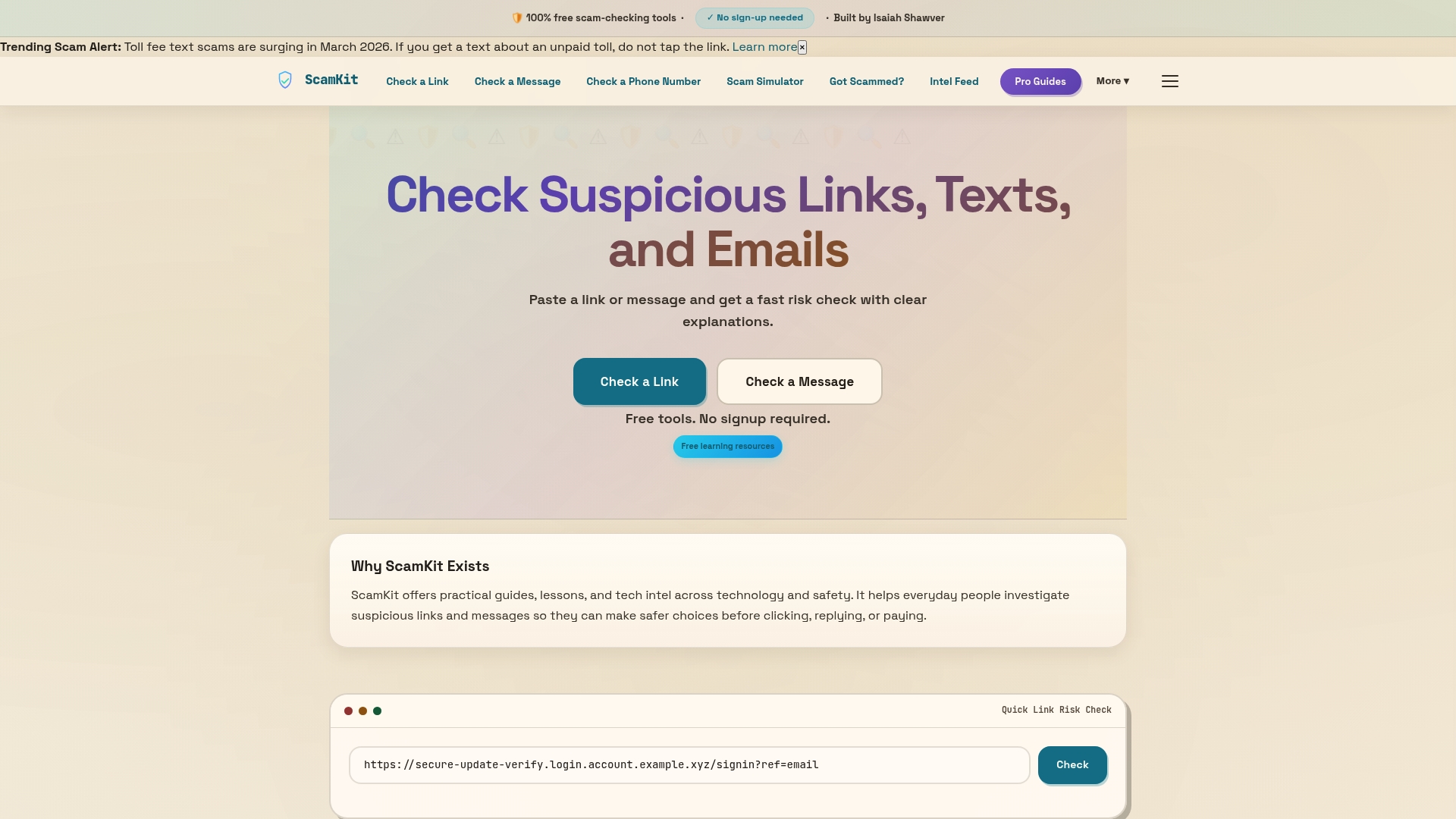
ScamKit offers free, no-signup tools designed for exactly this. You can check any suspicious link before you click it, getting an instant risk assessment in seconds. Want to test how well you and your family can spot a scam in real time? Try our Scam Simulator and find out where your blind spots are. For a broader look at staying ahead of threats, explore our guide on proactive scam defense. Everything on ScamKit is built to be fast, private, and genuinely useful. No technical knowledge required.
Frequently asked questions
What are the most common signs a message is a scam?
Urgent demands, pressure for secrecy, and requests for gift cards or crypto are the clearest warning signs. Legitimate organizations never ask for payment through untraceable methods.
Which scam techniques cause the biggest financial losses?
Investment scams, especially those involving cryptocurrency, consistently cause the highest losses per victim. Median losses range from $5,000 to $9,000, and these scams are frequently promoted through social media.
What technology do scammers use to be more convincing?
Scammers use AI voice cloning, spoofed caller IDs, deepfakes, and fake websites to impersonate trusted sources with alarming accuracy.
Who should I report a suspected scam to?
Report all scam attempts to the FTC at reportfraud.ftc.gov, the FBI's IC3, or the BBB Scam Tracker. Even small reports contribute to broader enforcement efforts.