

TL;DR:
- Fraud losses reached 12.5 billion dollars in 2024, with everyone still vulnerable.
- Recognizing warning signs like pressure, untraceable payments, and impersonation helps prevent scams.
- Building proactive security habits and using tools like ScamKit strengthens online protection.
Fraud losses hit $12.5 billion in 2024, and that number keeps climbing. Scammers are not just targeting careless people or the elderly anymore. They are going after everyone, including tech-savvy young adults, busy parents, and cautious seniors alike. If you have ever gotten a suspicious text, a strange phone call, or an email that felt slightly off, you already know how unsettling it can be. This guide gives you real, step-by-step actions to protect yourself and your family. No technical jargon. No complicated setups. Just practical tools, clear warning signs, and a solid plan you can start using today.
Table of Contents
- Understand the risks: Why everyone is vulnerable
- Recognize the warning signs: How to spot a scam in time
- Build your protection toolkit: Essential prevention steps
- Responding to threats: What to do if you suspect or experience a scam
- Our perspective: The uncomfortable truth about digital self-defense
- Stay safer with ScamKit: Proactive tools and support
- Frequently asked questions
Key Takeaways
| Point | Details |
|---|---|
| Scams target everyone | No one is immune, and overconfidence often increases risk. |
| Recognize warning signs | Unsolicited contact, urgency, and payment demands are major red flags. |
| Prevention tools matter | Use security basics like strong passwords, two-factor authentication, and verified contacts. |
| Respond quickly | If targeted, act fast: contact your bank, freeze accounts, and report the scam. |
| Education is essential | Ongoing, practical learning significantly lowers your susceptibility to scams. |
Understand the risks: Why everyone is vulnerable
A lot of people assume scams only happen to others. That belief is exactly what scammers count on. The reality is that anyone with a phone, email address, or bank account is a potential target. Age, education, and experience do not make you immune.
Here is a number that should stop you cold: 69% of people believe they can easily spot a scam, yet 43% of those same people have still been victimized. Overconfidence is one of the biggest vulnerabilities out there. Young adults between 18 and 34 are actually at higher risk than older generations in several scam categories, largely because they are more active online and more trusting of digital interactions.
Scammers rely on a small set of psychological tricks that work on almost everyone:
- Urgency: "Act now or lose your account." Pressure shuts down rational thinking.
- Authority: Pretending to be the IRS, your bank, or even a family member.
- Fear: Threatening arrest, lawsuits, or account suspension.
- Excitement: Fake prizes, job offers, or investment windfalls.
One of the newest and most alarming tactics is AI voice cloning. Scammers can now clone a loved one's voice using just a few seconds of audio from social media. You get a call that sounds exactly like your child or parent saying they are in trouble and need money fast. It is terrifying, and it works.
| Who scammers target | Why they are vulnerable |
|---|---|
| Seniors | More trusting, larger savings, less familiar with digital tactics |
| Young adults (18-34) | Active online, overconfident, quick to engage |
| Parents | Emotional triggers around family safety |
| Small business owners | Frequent transactions, less IT support |
| Everyone | Psychological triggers work across all groups |
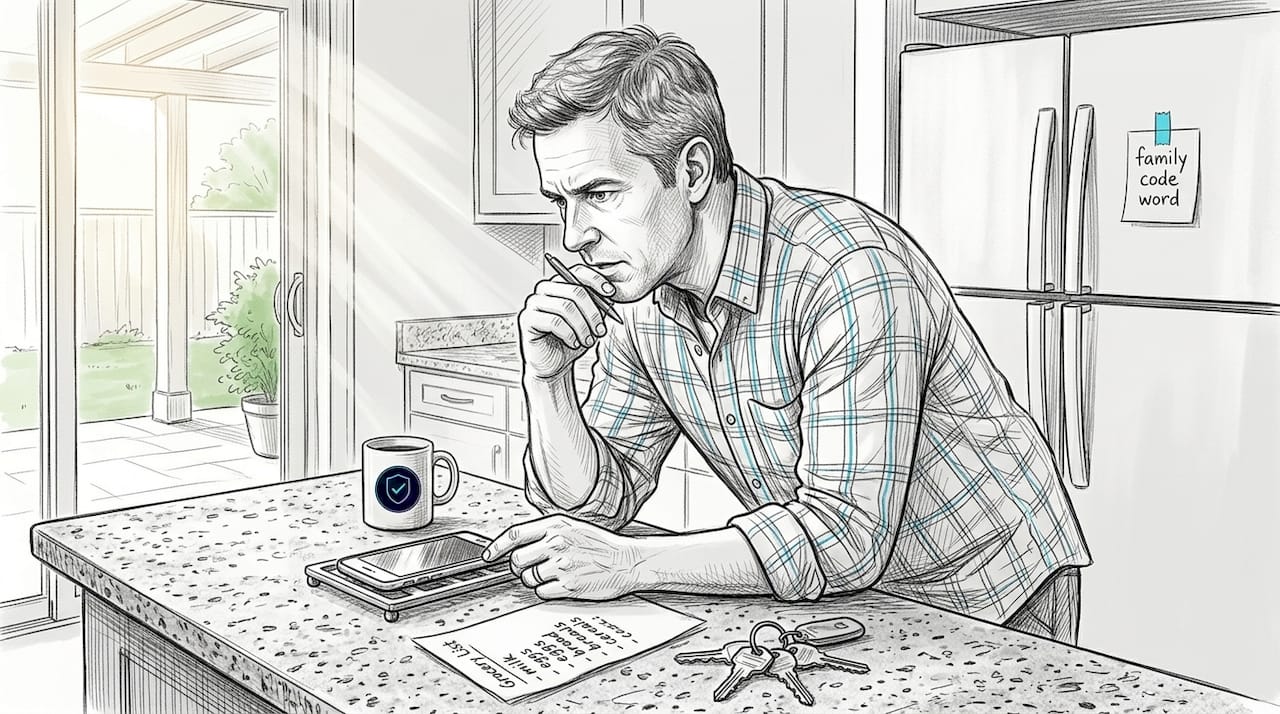
Pro Tip: Set up a family code word. If anyone calls claiming to be a relative in danger, they must say the code word before you take any action. Real scam examples show how effective this simple step can be.
The AARP recommends treating any unexpected contact with skepticism, especially when it triggers a strong emotional reaction. That feeling of panic or excitement is a signal to slow down, not speed up.
Recognize the warning signs: How to spot a scam in time
Knowing that scams exist is one thing. Recognizing one in the moment is another. Scammers are skilled at making their messages look and sound legitimate. But there are consistent red flags you can train yourself to notice.
The FTC identifies these as the most common warning signs:
- Unexpected contact from someone you did not reach out to first.
- Pressure to act immediately without time to think or verify.
- Requests for untraceable payment like gift cards, wire transfers, or cryptocurrency.
- Too-good-to-be-true offers such as prizes, jobs, or investment returns.
- Requests for personal information like your Social Security number or bank login.
- Links or attachments in unsolicited messages.
- Impersonation of a government agency, utility company, or well-known brand.
Payment method is one of the clearest signals. Legitimate organizations never ask you to pay with gift cards. Never. Gift cards and crypto are untraceable and nearly impossible to reverse, which is exactly why scammers love them. If someone asks you to pay with a gift card, hang up.
Key rule: Never pay with a method that cannot be traced or reversed. Credit cards offer the strongest consumer protection. Gift cards, wire transfers, and crypto offer almost none.
Learn more about scam avoidance strategies that go beyond the basics.
Here is a quick comparison of payment safety:
| Payment method | Reversible? | Traceable? | Scammer favorite? |
|---|---|---|---|
| Credit card | Yes | Yes | No |
| Bank transfer | Sometimes | Yes | Sometimes |
| Gift card | No | No | Yes |
| Cryptocurrency | No | Partially | Yes |
| Wire transfer | Rarely | Yes | Yes |
Pro Tip: If you get a suspicious call, hang up immediately. Do not press any buttons or say "yes." Then independently look up the company's real phone number and call them back directly. Never use a number the caller gave you. Understanding scam alert signs can help you act faster in the moment.
Build your protection toolkit: Essential prevention steps
Spotting scams is reactive. Building a protection toolkit is proactive. The good news is that most of the best defenses are free and take less than an hour to set up.
Start with these core security basics:
- Use strong, unique passwords for every account. A password manager makes this easy.
- Turn on two-factor authentication (2FA) on every account that offers it. This adds a second step, like a text code, before anyone can log in.
- Keep all software and apps updated. Updates patch security holes scammers exploit.
- Use spam filters on your email to block phishing attempts before they reach you.
- Secure your home Wi-Fi with a strong password and updated router firmware.
The FTC recommends treating any link in an unsolicited email as suspicious, even if it looks real. Always go directly to a website by typing the address yourself.
For families with kids, the steps are slightly different. Set parental controls on all devices, secure your home network, teach kids to verify before clicking, and enable automatic updates everywhere.
| Tool or action | Who it helps | Difficulty |
|---|---|---|
| Password manager | Everyone | Easy |
| Two-factor authentication | Everyone | Easy |
| Spam filter | Everyone | Easy |
| Parental controls | Families with kids | Moderate |
| Secure Wi-Fi setup | Households | Moderate |
| Device auto-updates | Everyone | Easy |
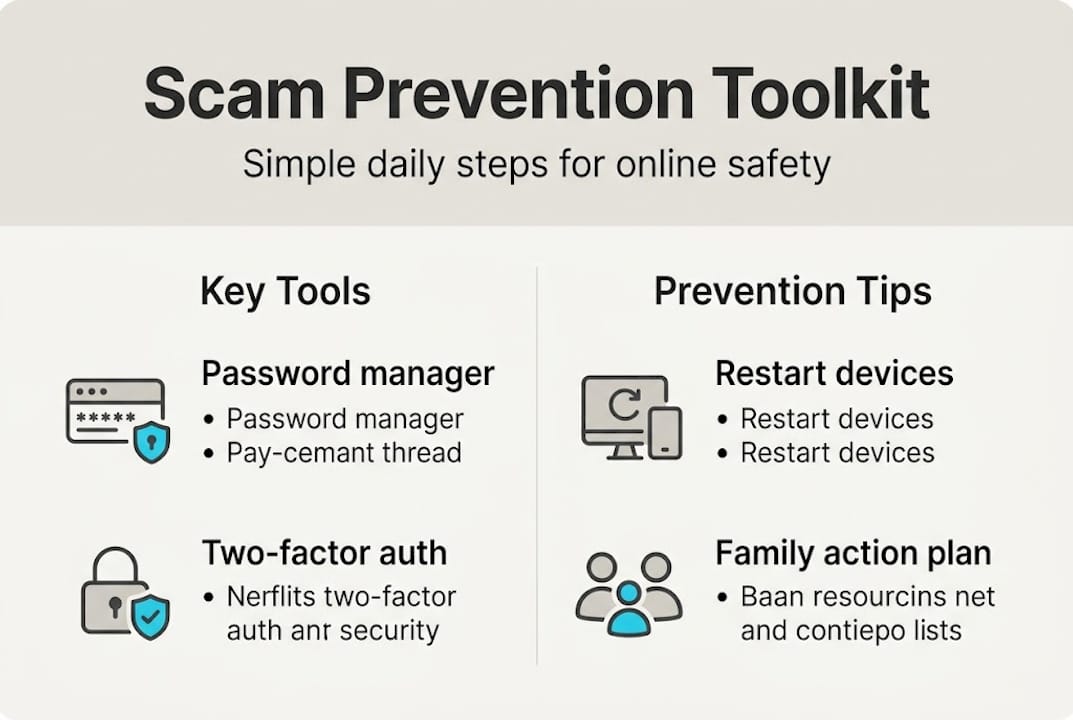
Some additional steps from AARP's security experts include restarting your devices regularly, using a secondary phone number for online signups, and checking ATMs or gas pumps for card skimmers before using them.
Pro Tip: Create a household action plan. Write down your bank's fraud hotline, a trusted family contact, and your family code phrase. Keep it somewhere accessible, not just on your phone. If a scam hits fast, you want that information ready without having to search for it. Learning about AI voice cloning scams and AI basics can help your whole family understand the newest threats.
Responding to threats: What to do if you suspect or experience a scam
Even with the best preparation, scams can still get through. What you do in the first few hours matters enormously. Fast action can mean the difference between recovering your money and losing it permanently.
If you suspect a scam is happening right now:
- Stop all communication immediately. Do not send more money or information.
- Do not let embarrassment slow you down. Scammers count on victims staying quiet.
- Screenshot or save any messages, emails, or transaction records.
- Contact your bank or payment provider right away and ask about reversing the transaction.
If you have already been scammed:
- Report to the FTC at ReportFraud.ftc.gov. Your report helps investigators track patterns.
- Freeze your credit with all three major bureaus: Equifax, Experian, and TransUnion. This is free and prevents new accounts from being opened in your name.
- Monitor your bank statements and credit reports closely for the next several months.
- Change passwords on any accounts that may have been compromised.
- Alert family members so they are not targeted by follow-up scams.
Know where to go for help. Our guide on what to do if scammed walks through each step in plain language.
The emotional impact is real and should not be ignored. Scam victims and their families often experience shame, anxiety, and broken trust. These feelings are normal. Support groups exist specifically for scam survivors, and reaching out to one can make a significant difference in recovery. Do not let a victim isolate themselves.
Pro Tip: Print out a simple scam response checklist and keep it with your household action plan. Include your bank's fraud line, FTC reporting link, and credit bureau freeze numbers. When panic sets in, having a physical list helps you stay focused. Visit our recover from scams guide for a full recovery roadmap.
Our perspective: The uncomfortable truth about digital self-defense
Here is something most guides will not tell you: one-time protection is not protection at all. Reading this article is a great start, but scams evolve constantly. The tactics that fooled people two years ago look nothing like what is circulating today. AI-generated voices, deepfake videos, and hyper-personalized phishing emails are now mainstream tools for criminals.
The danger of thinking "I already know about scams" is that it creates a false ceiling on your awareness. Education reduces scam susceptibility by roughly 40%, but only when that training is engaging and regularly refreshed. Boring, one-time training does not stick.
We believe the most effective defense is building small, consistent habits. Check suspicious links before clicking. Pause before responding to anything urgent. Talk to your family about new scam types every few months. These are not dramatic actions. But they compound over time. Revisiting best anti-scam practices regularly keeps your awareness sharp and your habits current. Start small. Stay consistent. That is what actually works.
Stay safer with ScamKit: Proactive tools and support
Reading about scams is valuable. But having tools that check threats in real time takes your protection to a completely different level.
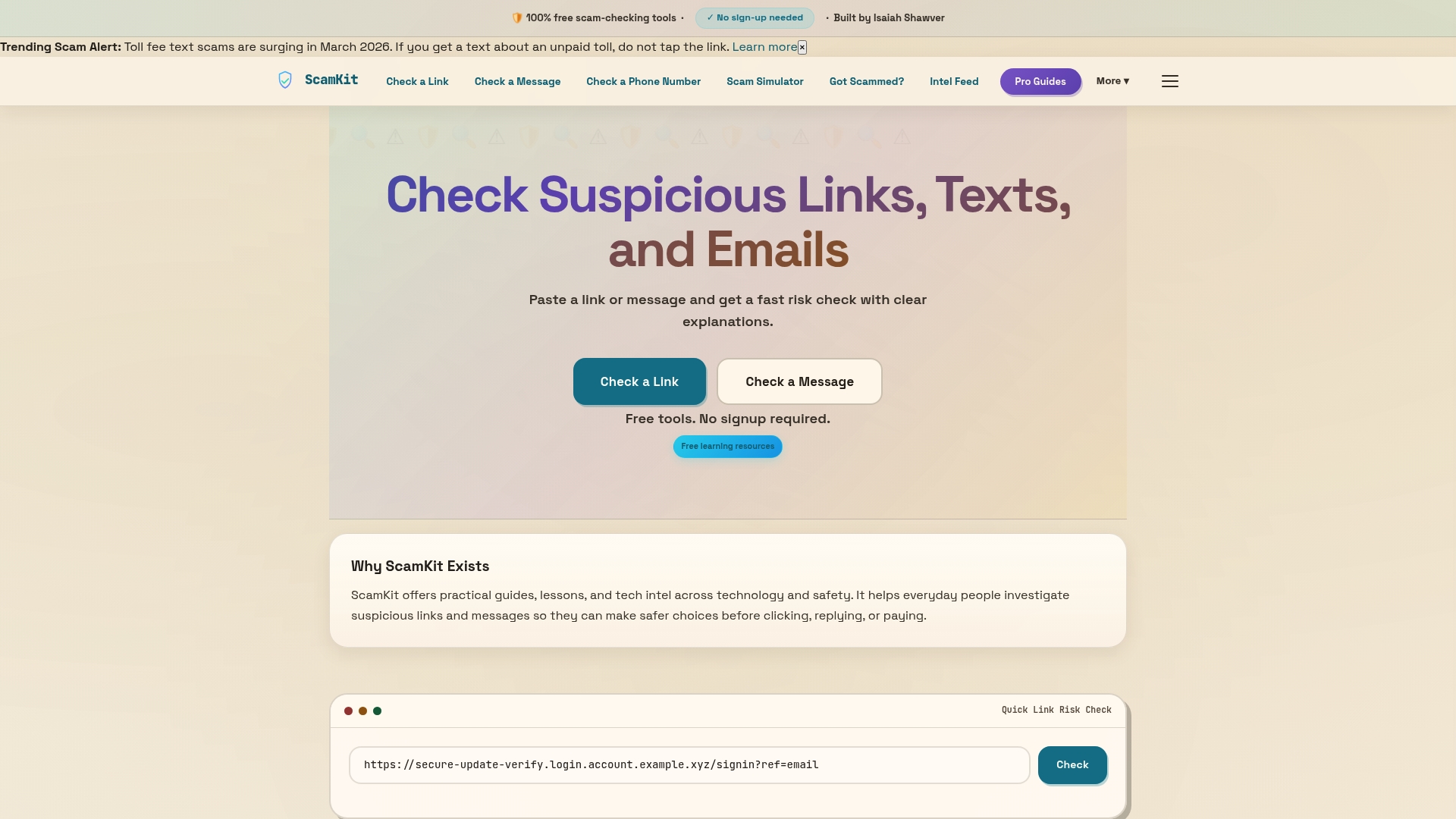
ScamKit is built for exactly this. Whether you have received a suspicious email, a strange text, or a link that does not feel right, you can check it instantly without signing up or sharing personal data. The URL scam checker analyzes links for known threats and gives you a clear risk rating in seconds. ScamKit also offers message analyzers, phone number screening, and educational guides that cover the latest scam tactics. It is all free and designed for everyday people, not security experts. Taking a proactive cybersecurity approach means you stop threats before they reach you, rather than cleaning up the damage after. Bookmark ScamKit and make it part of your regular online routine.
Frequently asked questions
What are the most common online scams in 2026?
The most common scams include phishing emails, AI voice cloning frauds, fake tech support calls, and payment scams demanding gift cards or crypto. These tactics are widespread because they are cheap to run and psychologically effective.
How can I verify if a message or email is a scam?
Never use the links or phone numbers inside a suspicious message. Instead, contact the company directly using their official website or a number you find independently.
What should I do immediately after being scammed online?
Call your bank or payment provider first and ask about reversing the transaction. Then freeze your accounts, report to the FTC at ReportFraud.ftc.gov, and monitor your credit closely.
Is scam education really effective?
Yes. Scam education reduces susceptibility by around 40% when training is engaging and updated regularly. Passive awareness alone is not enough.
How do I protect kids or seniors in my family from online scams?
Use parental controls, secure your home network, teach everyone to verify before clicking, and keep open conversations going about new scam types as they emerge.