
TL;DR:
- Scam baiting involves deliberately engaging with scammers to disrupt or gather evidence, but its effectiveness is unproven.
- It carries significant risks including doxing, malware, legal issues, and emotional distress, making safety precautions essential.
- Experts advise reporting scams to authorities, blocking suspicious messages, and focusing on prevention and education rather than confrontation.
Online scams are hitting record levels, and 73% of US adults experienced at least one scam in 2024, with total losses reaching $16.6 billion. When you hear those numbers, it's tempting to want to fight back. Some people do exactly that by engaging scammers directly, a practice known as scam baiting. It sounds satisfying. Maybe even heroic. But before you start typing fake replies to that suspicious email, you need to understand what scam baiting really involves, why it carries serious risks, and what actually works better for keeping you and your family safe.
Table of Contents
- What is scam baiting?
- Types of scam baiting and common tactics
- Effectiveness and risks of scam baiting
- Best practices and safer alternatives to scam baiting
- Why real protection requires a new mindset
- Take the next step: Turn awareness into action
- Frequently asked questions
Key Takeaways
| Point | Details |
|---|---|
| Scam baiting defined | Scam baiting means deliberately engaging scammers to waste their time or expose their tactics. |
| Major risks involved | Engaging scammers can expose you to retaliation, legal risk, and privacy threats. |
| Awareness vs. engagement | Raising awareness and reporting scams are safer and more effective than direct baiting. |
| Safer alternatives | Blocking, reporting, and educating others offer better protection against scams. |
| Proactive protection | Using scam detection tools and sharing knowledge proactively defends communities against scammers. |
What is scam baiting?
Scam baiting isn't new, but it's getting more attention as online fraud spreads. At its core, it's exactly what it sounds like: deliberately playing along with a scammer to disrupt or expose them.
"Scam baiting is the practice of deliberately engaging with scammers online or by phone to waste their time, frustrate them, gather evidence, or expose their operations."
The idea is that if you keep a scammer occupied, they have less time to target someone more vulnerable. Some baiters record their interactions and post them online to warn others. Others collect evidence to hand over to law enforcement. And yes, some do it purely for fun or the satisfaction of turning the tables.
Scam baiting happens across multiple platforms. Email is the most common starting point, especially for phishing and advance fee scams. Phone calls are also a huge target, with tech support scams being a favorite among baiters. Messaging apps like WhatsApp and Telegram are newer battlegrounds as scammers have shifted their tactics.
So why do people do it? The motivations break down into a few main categories:
- Disruption: Keeping scammers busy so they can't reach real victims
- Evidence gathering: Documenting scam tactics to report or expose them
- Education: Sharing recordings or transcripts to help others recognize common scam techniques
Before you consider baiting, it's worth building a strong foundation with practical scam prevention steps that protect you without putting you at risk.
Scam baiting has a real community behind it. YouTube channels dedicated to baiting have millions of subscribers. That popularity makes it feel accessible. But there's a big gap between watching someone else do it and doing it safely yourself.
Types of scam baiting and common tactics
Not all scam baiting looks the same. There are distinct approaches, each with different goals and risk levels.
| Type | Goal | Risk level |
|---|---|---|
| Casual baiting | Entertainment, wasting scammer's time | Low to moderate |
| Investigative baiting | Extracting operational info, identifying networks | High |
| Organized or ethical baiting | Supporting law enforcement, using strict anonymity tools | Moderate with safeguards |
Types range from casual trolling for entertainment, to investigative baiting that extracts information about scam operations, to ethical baiting conducted by or alongside law enforcement using proxies for anonymity.
Casual baiters usually play dumb, stringing scammers along with fake information. Investigative baiters go further, trying to learn details about the scam's structure, location, or network. Organized efforts sometimes involve researchers or consumer protection agencies working in a controlled way.
Here's how a typical scam baiting interaction unfolds:
- Receive a scam message via email, phone, or text
- Respond with a fake persona, using a burner account and fictitious personal details
- Play along slowly, asking questions and feeding false information
- Document everything, taking screenshots or recordings for evidence
- Exit cleanly, cutting contact before the scammer can escalate or retaliate
Common tactics include pretending to be an eager victim, inventing elaborate backstories, requesting more details about the supposed prize or offer, and stalling with fake paperwork or excuses.
Knowing scam avoidance strategies can also help you recognize what baiters are working against and how these scammers operate under pressure.
Pro Tip: Never engage a scammer from your real email account, phone number, or personal device. Use a dedicated burner account, a separate device if possible, and always a VPN. One slip can expose your identity and location.
Even casual baiting requires preparation. Scammers are not always working alone. Many operate within organized crime networks that can respond aggressively if they feel they're being played. Part of checking if a call is a scam is understanding just how professional these operations can be.

Effectiveness and risks of scam baiting
Here's where things get uncomfortable. Scam baiting feels impactful, but the actual evidence for its effectiveness is thin.
There are no direct empirical benchmarks proving that individual scam baiting reduces overall scam rates. Meanwhile, scam losses hit $16.6 billion in 2024, and only about 7% of scam victims globally even report what happened to them. The scale of the problem vastly outpaces what any individual baiter can realistically address.
When one scammer gets frustrated and walks away, another is already online targeting someone new. Scam operations are often large, redundant, and resilient. Taking up one scammer's afternoon doesn't shut down the call center behind them.
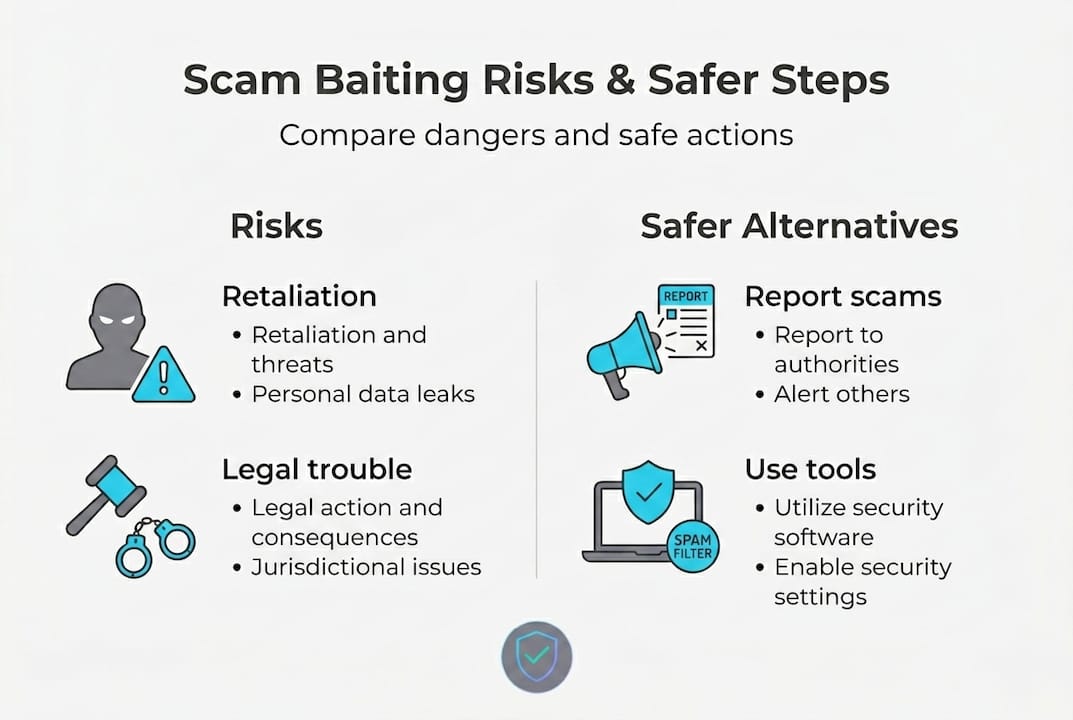
Beyond effectiveness, the personal risks are real and serious. Here are the main dangers:
- Doxing: Scammers may identify your real location, identity, or contact details if your anonymity slips
- Malware: Scammers often send infected files disguised as documents; opening them can compromise your device
- Legal issues: Depending on what you do during baiting, you could face legal consequences in your own jurisdiction
- Emotional distress: Extended engagement with manipulative, sometimes threatening individuals takes a psychological toll
- Escalation: Some scammers have been known to send physical threats or involve associates when they realize they've been baited
"Scam baiting is not without risks. Baiters can expose themselves to retaliation, and the activity walks a legal gray area that varies by country and action."
For most people, the safer digital life guide approach means staying out of direct contact with scammers entirely and focusing on detection, reporting, and education instead.
The excitement of "winning" against a scammer can make people underestimate the exposure they're creating. The risk-to-reward ratio rarely favors the individual bait er when you look honestly at the numbers.
Best practices and safer alternatives to scam baiting
Given the significant risks and questionable rewards of scam baiting, what should you do instead? The safest and most impactful alternatives are clear.
| Action | Safety level | Real-world impact |
|---|---|---|
| Report to FTC or IC3 | High | Contributes to enforcement data |
| Block and delete scam messages | High | Protects you immediately |
| Use a scam checker tool | High | Prevents accidental engagement |
| Share scam awareness with family | High | Protects vulnerable loved ones |
| Scam baiting | Low to moderate | Minimal proven impact |
Expert best practices emphasize using VPNs and proxy tools for anonymity, never sharing real personal data, reporting findings to authorities like the FTC or IC3, and focusing on education rather than direct confrontation.
Here's what you should do when you receive a scam message:
- Don't respond to the scammer directly or click any links
- Check suspicious content using a trusted tool, especially for unknown URLs or text messages
- Report it to the FTC at ftc.gov/scams or the FBI's IC3 for phone and online fraud
- Block the sender immediately on whatever platform the message arrived
- Share what you learned with friends or family who might be at risk, especially older relatives
Understanding scam templates is genuinely useful here. Scammers reuse scripts constantly. If you know what a fake bank alert or lottery scam looks like in writing, you can spot it in seconds and move on without any confrontation.
Pro Tip: Instead of baiting a scammer, forward suspicious texts to 7726 (SPAM) on most US carriers. It's free, takes five seconds, and actually feeds data to networks that block future scam attempts at scale.
For suspicious links and texts, checking suspicious text messages before you do anything else is one of the simplest habits you can build. It takes seconds and removes the temptation to engage at all.
Why real protection requires a new mindset
Here's an uncomfortable truth: the scam baiter folk-hero image is mostly fiction. People love watching YouTube videos of scammers being humiliated. It feels like justice. But watching someone waste a scammer's hour doesn't protect your mom from a fake IRS call tomorrow morning.
"Experts contrast scam baiting with safer alternatives like immediate reporting, noting that engagement risks personal safety and legality, and it is not recommended as a protective strategy."
Real protection is less dramatic but far more effective. It looks like families talking openly about how scams work. It looks like communities using shared tools to flag threats before they spread. It looks like one person forwarding a warning to a group chat and stopping five people from being victimized.
The best scam avoidance strategies aren't about outmaneuvering individual bad actors. They're about building systems, habits, and awareness that make scams less effective across the board. Proactive cybersecurity beats reactive confrontation every time. The goal isn't to win a battle with one scammer. It's to make the whole ecosystem safer.
Take the next step: Turn awareness into action
If this article has you thinking seriously about scam protection, you're already ahead of most people. Now it's time to act on that awareness, without putting yourself at risk through direct scammer engagement.

ScamKit gives you proactive cybersecurity tools that do the heavy lifting safely. You can use the free URL scam checker to instantly analyze suspicious links before clicking, screen unknown phone numbers, and review scam message patterns, all without signing up or sharing your personal information. If you need guidance on next steps or want to understand a specific threat, get expert help directly from the ScamKit team. Protecting yourself shouldn't require playing dangerous games with criminals.
Frequently asked questions
Is scam baiting illegal?
Scam baiting can be legal if you avoid breaking laws or impersonating real individuals, but legal consequences vary significantly by country and by the specific actions you take during an engagement.
Does scam baiting actually reduce scam rates?
There is no empirical evidence that individual scam baiting reduces overall scam rates; reporting scams to authorities and raising public awareness have a far more measurable effect.
What are the main risks of scam baiting for individuals?
Scam baiting exposes you to retaliation and doxing, as well as malware, legal complications, and psychological stress, especially if your anonymity breaks down during engagement.
What should I do if I receive a scam message?
Block the sender, avoid responding, and report it to the FTC or IC3 so authorities can track patterns and take action against the scam operation.